 40 Acres and a Mule: The Broken Promise that Redefined American Liberty
The phrase 40 acres and a mule remains one of the most powerful symbols in American history. What began as a promise of independence and stability for newly freed families quickly turned into one of the most significant broken commitments of the post-Civil War era. Understanding 40 acres and a mule meaning is essential for anyone exploring the long and complex journey of freedom in the United States.
When historians examine Black land ownership history, they often return to this moment in 1865 a moment filled with hope, determination, and the belief that true freedom required more than legal emancipation. It required land, opportunity, and the chance to build a future.
The Genesis: Special Field Order No. 15
In January 1865, near the end of the Civil War, Union General William Tecumseh Sherman met with a group of Black community leaders in Savannah, Georgia. Their message was clear: freedom without land would leave families vulnerable and dependent.
In response, Sherman issued Special Field Order No. 15, a directive that set aside approximately 400,000 acres of coastal land across South Carolina, Georgia, and Florida. This policy laid the foundation for what would later be remembered as 40 acres and a mule a plan intended to help formerly enslaved families become self-sufficient farmers.
For many, this decision represented the first real chance to participate in the American economy as independent landowners.
The Reversal: A Dream Interrupted
The promise, however, did not last. After the assassination of Abraham Lincoln, the presidency passed to Andrew Johnson, whose policies dramatically changed the direction of Reconstruction.
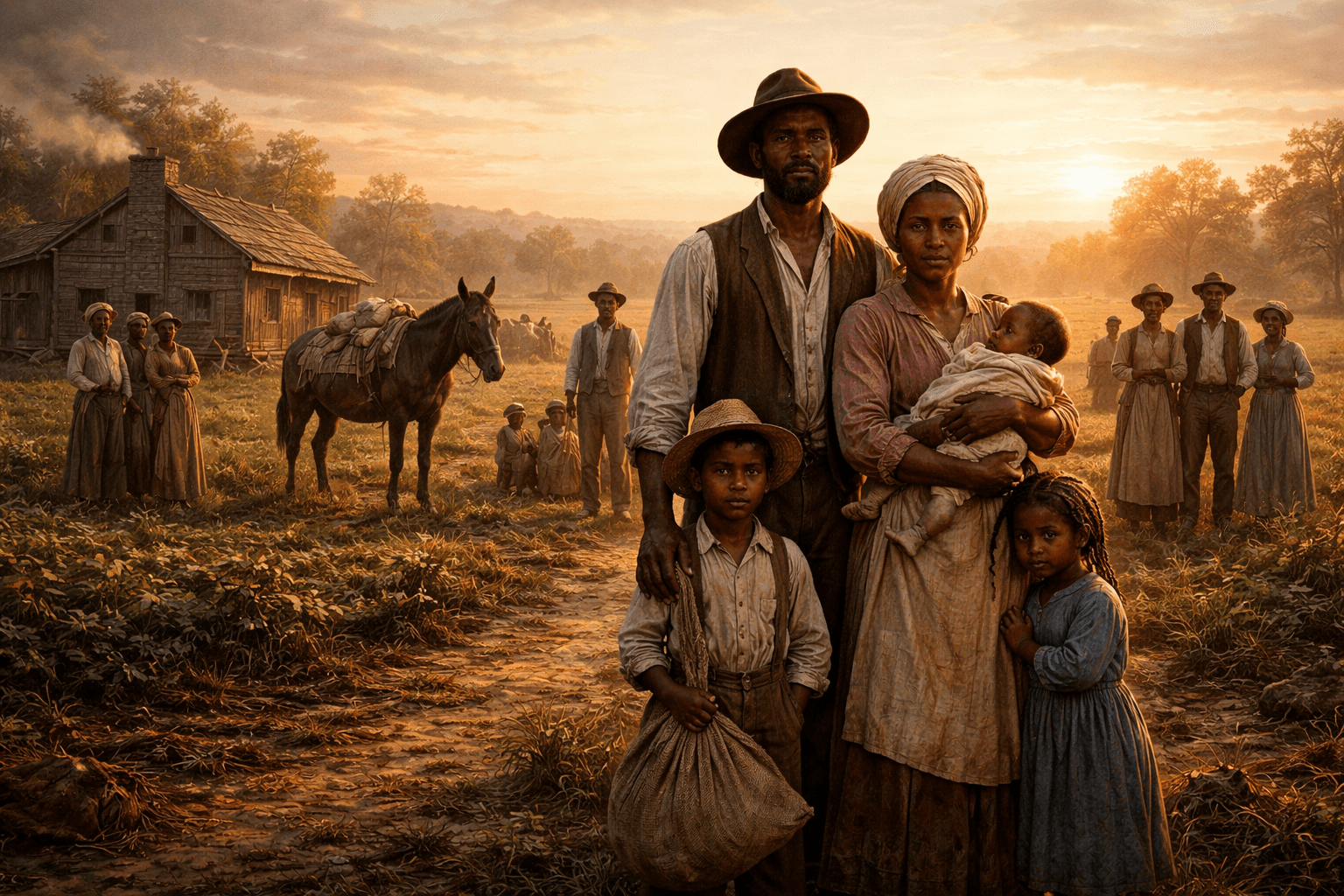
Johnson ordered that confiscated land be returned to former plantation owners. Families who had already begun farming were forced to leave their homes, often with little warning. This sudden reversal reshaped Black land ownership history and created widespread economic instability.
Without land, many freed families entered the sharecropping system, a labor arrangement that kept them in cycles of debt and poverty for generations.
The Migration to the West
As opportunities in the South disappeared, thousands of Black families began moving westward in search of land and independence. This migration marked an important chapter in the broader story of the Reconstruction era, as communities sought new beginnings beyond the plantation economy.
States such as Kansas, Oklahoma, and Nebraska became destinations for settlers determined to build their own futures. Many of the frontier figures later celebrated in Western history including lawmen like Bass Reeves and cowboys like Nat Love emerged from this generation shaped by resilience and determination.
Their journeys reflected the same desire that fueled the original demand for 40 acres and a mule: ownership, dignity, and control over one’s destiny.
A Legacy That Still Shapes the Present
More than 150 years later, the story of 40 acres and a mule continues to influence conversations about wealth, opportunity, and justice in America. Economists and historians frequently reference this moment when discussing inequality and generational wealth gaps.
The phrase has also entered popular culture. Filmmaker Spike Lee named his production company 40 Acres and a Mule Filmworks, highlighting the connection between representation, ownership, and storytelling. Similarly, artist Kendrick Lamar referenced the promise in his music to illustrate the lasting consequences of economic injustice.
These modern references demonstrate how a policy decision from 1865 still resonates in contemporary society.
Why This History Matters Today
Understanding 40 acres and a mule meaning is not just about the past it is about recognizing how policy decisions shape generations. The broken promise revealed that freedom alone was not enough without economic support and access to resources.
Today, scholars studying Black land ownership history continue to analyze this moment as a turning point in American economic development. It serves as a reminder that justice requires not only equality under the law but also fair access to opportunity.
The story of 40 acres and a mule remains a powerful lesson in responsibility, leadership, and the long struggle for economic independence. To understand how migration shaped new communities, explore our article on The Great Migration and its role in expanding land ownership opportunities in the American West.
Key Takeaways
- 40 acres and a mule ek historical policy ka symbol hai jo freed slaves ko land provide karne ke liye design hui thi.
- Special Field Order No. 15 ne approximately 400,000 acres land redistribute karne ka plan banaya tha.
- President Andrew Johnson ne policy reverse kar di aur land previous owners ko return kar di.
- Land ownership failure ne generational wealth creation ko significantly impact kiya.
- Aaj bhi ye phrase economic justice aur reparations debates mein central role play karti hai.
 Reader FAQs
What does 40 acres and a mule mean?
40 acres and a mule refers to a post-Civil War promise to provide land and resources to formerly enslaved families so they could build independent lives. The promise was never fully implemented.
Who promised 40 acres and a mule?
The policy originated from Union General William Tecumseh Sherman through Special Field Order No. 15 in 1865 during the final months of the Civil War.
Why was the promise of 40 acres and a mule taken away?
After President Abraham Lincoln was assassinated, President Andrew Johnson reversed the policy and returned land to former plantation owners.
How did 40 acres and a mule affect Black land ownership?
The cancellation of the policy prevented many freed families from building wealth through land ownership, shaping the long-term patterns seen in Black land ownership history today.
For deeper historical reference and credibility, link to:
Read the full historical background of Forty Acres and a Mule