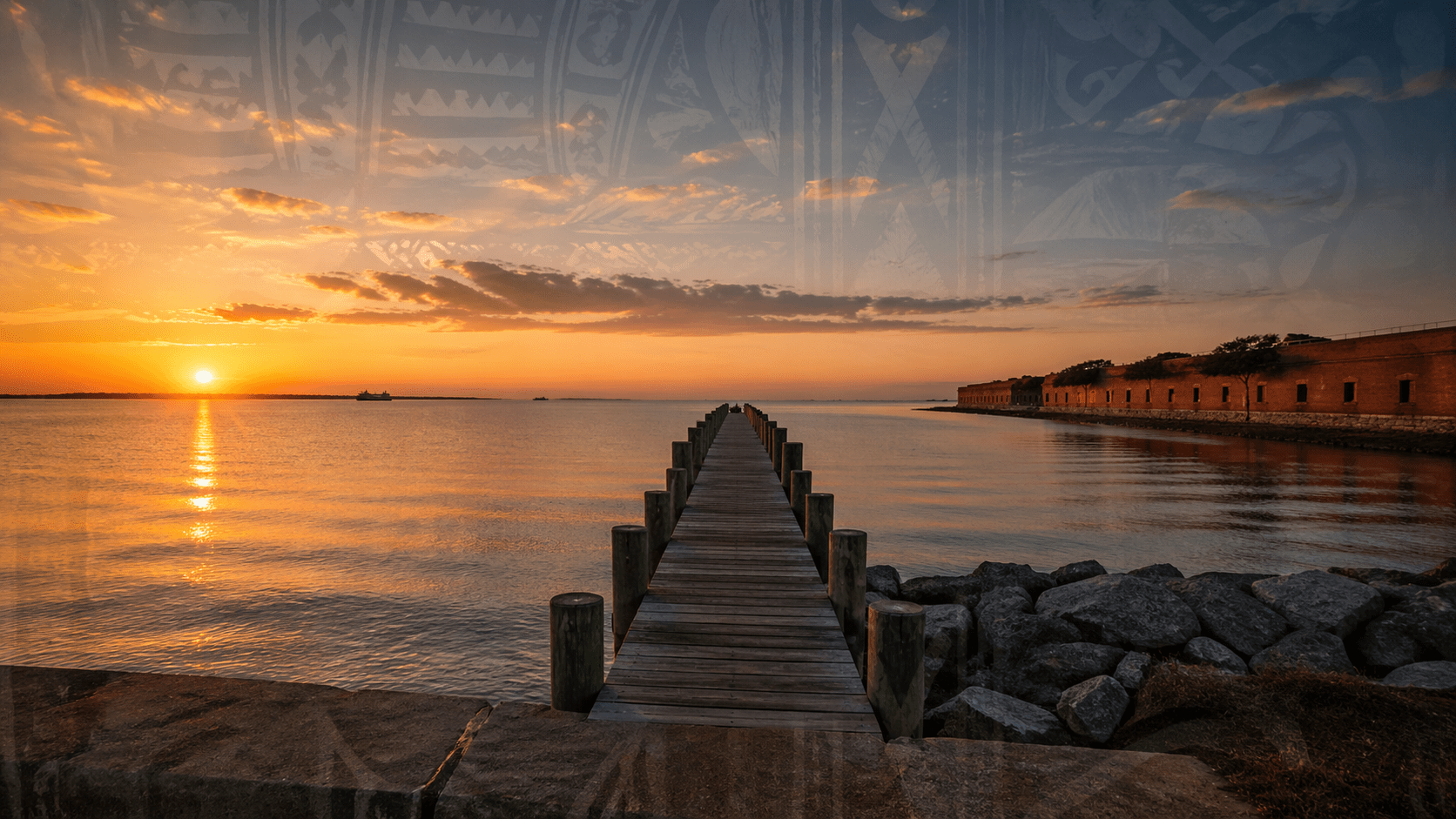
Black History in Virginia: A Complete Guide to 400+ Years of Legacy, Struggle & Triumph
Virginia is not just a state it is the heartbeat of Black American history. No other place in the United States carries a longer, more continuous record of Black life, resilience, and cultural contribution than the Commonwealth of Virginia. From the first Africans who stepped onto its soil in 1619 to the civil rights warriors who changed a nation in the 20th century, black history in Virginia stretches across more than 400 unbroken years.
This article is a deeply researched, fact-based guide to black history in Virginia covering the key people, pivotal moments, significant sites, and the lesser-known stories that shaped not just a state, but an entire nation.
Table of Contents
- The Beginning: 1619 and the First Africans in Virginia
- The Era of Slavery in Colonial Virginia
- Resistance, Rebellion, and the Road to Freedom
- The Civil War & Emancipation
- Reconstruction and the Rise of Black Institutions
- Jim Crow, Segregation & the Fight for Civil Rights
- Key Black Historical Figures from Virginia
- Black History Virginia: Must-Visit Sites
- Key Takeaways
- FAQs About Black History in Virginia
 1. The Beginning: 1619 and the First Africans in Virginia
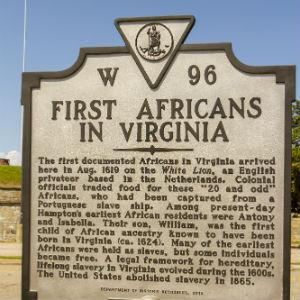
The story of black history in Virginia begins at Point Comfort present-day Fort Monroe in Hampton in August 1619. That year, an English privateer ship arrived carrying “20 and odd” Africans taken from a captured Portuguese slave vessel. These individuals were among the first Africans to set foot in English North America.
Historians note that their exact legal status was ambiguous at first. Some were treated similarly to white indentured servants, able to work off their time and gain freedom. Two of them Anthony and Mary Johnson eventually acquired land and owned servants themselves, representing a brief window of relative opportunity that would be forcibly closed within decades.
This moment 1619 at Point Comfort, Virginia is now considered the official starting point of Black American history in the United States, a fact that makes black history in Virginia uniquely foundational to the entire nation.
 2. The Era of Slavery in Colonial Virginia
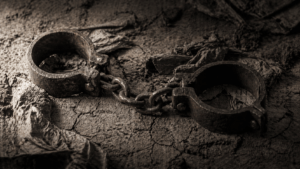
As tobacco farming expanded across Virginia, the demand for labor grew rapidly. By the 1640s and 1650s, Virginia courts began formalizing the institution of chattel slavery through a series of laws that stripped Black people of their freedom permanently.
Key legislative milestones in Virginia’s slavery era:
- 1640 – John Punch becomes the first documented person legally enslaved for life in Virginia after attempting to escape, a ruling that set a legal precedent.
- 1662 – Virginia law declared that a child’s status (free or enslaved) followed the mother’s condition meaning enslaved women’s children were automatically enslaved.
- 1705 – The Virginia Slave Code consolidated all previous laws into a comprehensive system that classified enslaved Africans as property, removed legal protections, and criminalized interracial relationships.
By the mid-1700s, Virginia had the largest enslaved population of any colony in North America. The African American experience in Virginia during this era was defined by brutal labor, family separation, and systematic dehumanization and yet also by remarkable cultural preservation and quiet acts of resistance.
3. Resistance, Rebellion & the Road to Freedom
Black history in Virginia is also a story of extraordinary courage. Enslaved people in Virginia did not accept their bondage passively they resisted in countless ways, from work slowdowns and feigned illness to outright rebellion.
Nat Turner’s Rebellion (1831)
The most significant slave rebellion in American history took place in Southampton County, Virginia. Nat Turner, a deeply religious enslaved man, led an uprising on August 21, 1831, that resulted in the deaths of approximately 60 white Virginians. The rebellion sent shockwaves through the South and led to severe crackdowns on Black Virginians both enslaved and free. Turner was captured, tried, and executed, but his rebellion permanently changed the national conversation about slavery.
Gabriel’s Conspiracy (1800)
Twenty years before Turner, Gabriel, an enslaved blacksmith from Henrico County near Richmond, organized one of the most sophisticated freedom plots in Virginia’s history. Gabriel planned to march thousands of enslaved people into Richmond to demand their freedom. The conspiracy was revealed before it could be executed, and Gabriel was hanged but his vision inspired generations of freedom seekers.
4. The Civil War & Emancipation
Virginia became one of the most contested battlegrounds of the Civil War, and the black history Virginia carries from this period is immense. Tens of thousands of enslaved Virginians seized the opportunity to flee to Union lines, severely disrupting the Confederate war economy.
Fort Monroe the very site where Africans first landed in 1619 became a sanctuary for freedom seekers. When Union General Benjamin Butler refused to return three escaped enslaved men in 1861, declaring them ‘contraband of war,’ it opened the floodgates. Thousands followed, effectively liberating themselves long before the Emancipation Proclamation was signed in January 1863.
Richmond itself, the Confederate capital, was among the cities where Black Union soldiers marched victoriously in April 1865. Black Virginians celebrated emancipation not just as a legal event, but as the fulfillment of a 246-year struggle for freedom.
5. Reconstruction and the Rise of Black Institutions
The years following the Civil War known as the Reconstruction era (1865–1877) saw a rapid and remarkable flowering of Black life and institution-building across Virginia.
- Black churches became the cornerstone of community life, offering not just spiritual guidance but schools, social services, and political organizing spaces.
- Virginia’s first Historically Black Colleges and Universities (HBCUs) were founded during this era, including Virginia Union University (1865) and Hampton University (1868), the latter founded to educate formerly enslaved people.
- Black Virginians voted, ran for office, and served in the state legislature during Reconstruction. Twenty-seven Black men served in the Virginia General Assembly between 1869 and 1890.
This period of progress was violently reversed with the reimposition of white supremacist governance, leading directly into the era of Jim Crow.
6. Jim Crow, Segregation & the Fight for Civil Rights
Virginia’s Jim Crow era lasted from the 1880s through the 1960s nearly a century of legal apartheid. The state implemented poll taxes, literacy tests, and grandfather clauses to disenfranchise Black voters. Separate and unequal schools, restaurants, hospitals, and public spaces defined daily life.
Massive Resistance
After the Supreme Court’s landmark Brown v. Board of Education ruling in 1954 declared school segregation unconstitutional, Virginia’s state government launched a policy called ‘Massive Resistance.’ Rather than integrate schools, Virginia officials closed public schools entirely in several counties affecting both Black and white students. Prince Edward County kept its public schools closed from 1959 to 1964, denying Black children education for five years.
Barbara Johns and the Moton School Strike (1951)
Three years before Brown v. Board, a 16-year-old Black student named Barbara Johns led a student strike at Robert Russa Moton High School in Farmville, Virginia, protesting the overcrowded and deteriorating condition of their segregated school. The case she inspired Davis v. County School Board of Prince Edward County became one of the five cases bundled into the Brown v. Board ruling. Johns’ courage was pivotal to ending legal school segregation in America.
7. Key Black Historical Figures from Virginia
- Booker T. Washington (1856–1915) – Born enslaved in Franklin County, Virginia. Became the most influential Black leader and educator of the late 19th century, founding the Tuskegee Institute in Alabama.
- Maggie Lena Walker (1864–1934) – Richmond-born trailblazer who became the first African American woman to charter a bank and serve as its president. The Maggie L. Walker National Historic Site in Richmond honors her legacy.
- Arthur Ashe (1943–1993) – Richmond native and the first Black man to win Wimbledon, the U.S. Open, and the Australian Open. A passionate civil rights advocate, his statue stands prominently on Monument Avenue.
- Barbara Johns (1935–1991) – Farmville, Virginia student leader whose 1951 school strike was instrumental in ending legal school segregation nationwide.
- Douglas Wilder (born 1931) – Richmond native who became the first African American elected governor in U.S. history, serving as Virginia’s Governor from 1990 to 1994.
8. Black History Virginia: Must-Visit Sites & Landmarks
For anyone seeking to connect with black history in Virginia in a meaningful way, these sites are essential:
- Fort Monroe National Monument (Hampton) – Where the first Africans arrived in 1619. Now a national monument preserving this foundational story.
- Maggie L. Walker National Historic Site (Richmond) – The preserved home of America’s first Black female bank president.
- Black History Museum & Cultural Center of Virginia (Richmond) – Dedicated to sharing, interpreting, and preserving the history and culture of African Americans in Virginia.
- Colonial Williamsburg (Williamsburg) – Offers programming specifically dedicated to the lives of enslaved people who built and maintained the colonial capital.
- Monticello (Charlottesville) – Thomas Jefferson’s home now extensively interprets the lives of the over 600 enslaved people who lived and worked there.
- Robert Russa Moton Museum (Farmville) – Located at the former Moton High School, it tells the story of the 1951 student strike that helped end school segregation.
- Jackson Ward (Richmond) – Once known as the ‘Harlem of the South,’ this historic neighborhood was the economic and cultural center of Black life in post-Civil War Richmond.
Key Takeaways
- Virginia holds the longest continuous Black history of any U.S. state, spanning more than 400 years.
- The first Africans in English North America arrived at Point Comfort, Virginia, in August 1619.
- Virginia’s Slave Codes of the 17th and 18th centuries became the legal model for chattel slavery across the American South.
- Resistance to slavery in Virginia was constant from Gabriel’s Conspiracy (1800) to Nat Turner’s Rebellion (1831).
- Black Virginians played a decisive role in the Civil War by self-liberating in massive numbers and serving in the Union Army.
- Virginia gave America some of its greatest Black leaders: Booker T. Washington, Maggie Lena Walker, Arthur Ashe, Barbara Johns, and the first Black U.S. governor, L. Douglas Wilder.
- Black history in Virginia is not a single story it is a living, ongoing legacy best explored through its historic sites, institutions, and communities.
FAQs About Black History in Virginia
Why did slavery begin in Virginia?
Slavery in Virginia grew out of economic necessity in the tobacco-farming economy. As demand for cheap, permanent labor increased, colonial Virginia courts progressively formalized chattel slavery through legislation between the 1640s and 1705, creating a legal framework that spread across the American South.
What happened to the first Africans in Virginia?
The first Africans arrived at Point Comfort in August 1619, brought by English privateers. Their initial legal status was ambiguous some were treated as indentured servants and later gained freedom, owned land, and even employed servants themselves. However, within decades, Virginia law stripped all Black people of these rights, formalizing hereditary slavery.
Why does Virginia have a large Black population?
Virginia’s large Black population is a direct legacy of the transatlantic slave trade. Virginia was the most populous colony/state in terms of enslaved Africans for most of the 17th–19th centuries. After emancipation, Black Virginians largely remained in the state, building communities, churches, and institutions across generations.
Who had the most slaves in Virginia?
Among individuals, wealthy plantation owners in Tidewater and Piedmont Virginia enslaved the largest numbers. Notably, Thomas Jefferson enslaved over 600 people over the course of his lifetime at Monticello the most of any Founding Father from Virginia. Statewide, Virginia had more enslaved people than any other state at the time of the first U.S. Census in 1790.
Where is the best place to learn about Black history in Virginia?
The Black History Museum & Cultural Center of Virginia in Richmond is the state’s premier institution dedicated to African American history. Fort Monroe in Hampton, the Maggie L. Walker National Historic Site, the Moton Museum in Farmville, and Colonial Williamsburg’s African American programming are all outstanding resources for exploring black history in Virginia.
What is the significance of Virginia to Black American history nationally?
Virginia is the geographical origin point of Black American history in the United States. The legal, social, and cultural foundations of African American life including the origins of chattel slavery, major resistance movements, emancipation, and civil rights breakthroughs were all shaped in large part by events that occurred in Virginia. Understanding black history in Virginia is essential to understanding Black American history as a whole.
About This Perspective
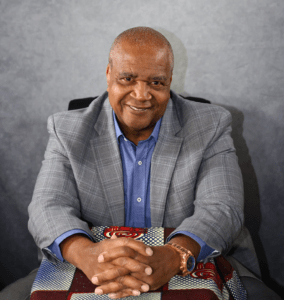
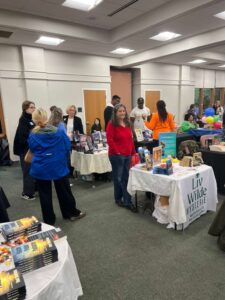
Lonesome B. Augustine is a Black American author, veteran, and Christian speaker based in Fredericksburg, Virginia. His work explores the untold stories of Black American history through faith-driven, historically grounded storytelling. His novel Dark Prairie a historical fiction about Black cowboys draws directly from the same rich tradition of Black history that Virginia helped shape. Explore his books and upcoming events at lonesomeaugustine.com.