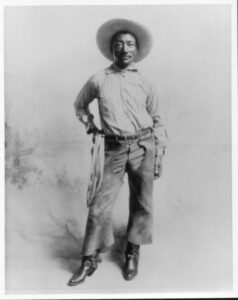
 Bill Pickett: The Legendary “Dusky Demon” Who Defined Black Rodeo History
When people picture the American West, they often imagine cowboys riding across dusty plains or competing in thrilling rodeo events. Yet one name stands above the rest in the history of rodeo innovation Bill Pickett. Known as the “Dusky Demon,” he was not just a performer but a pioneer who transformed rodeo into a professional sport.
But who was Bill Pickett, and why does his legacy remain one of the most important stories in Black rodeo history today?
He was a fearless athlete, an inventor of new rodeo techniques, and a trailblazer who broke racial barriers during a time when opportunities were limited for African American cowboys. His achievements changed the way rodeo competitions were performed and remembered.
Understanding Bill Pickett facts helps reveal how innovation, courage, and determination shaped the entertainment culture of the American frontier.
The Invention of Bulldogging: A Revolutionary Rodeo Technique
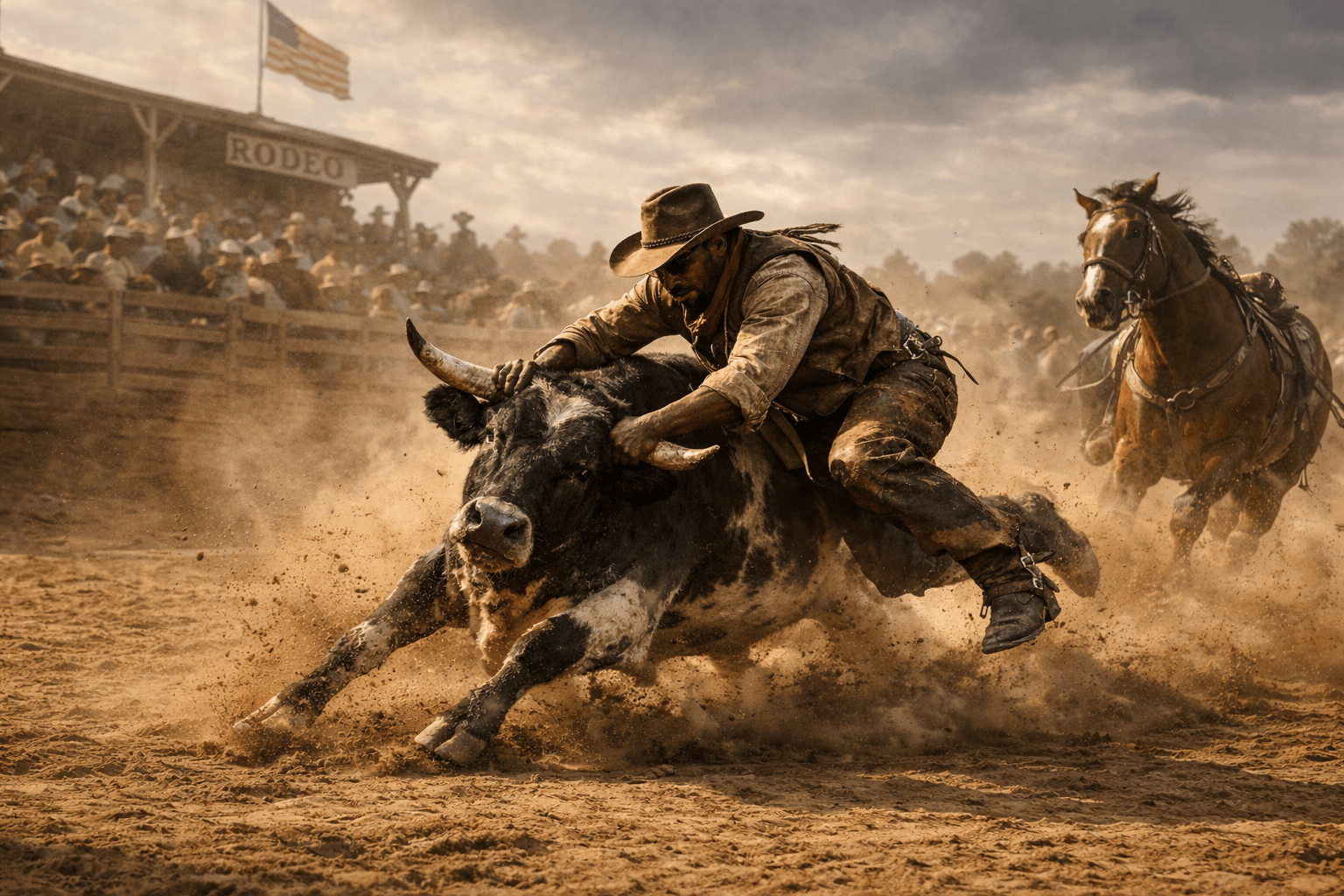
One of the most important contributions made by Bill Pickett was the invention of a rodeo event known as Bulldogging, now officially called steer wrestling. This dangerous and physically demanding technique became one of the signature events in professional rodeo competitions.
How the Technique Worked
- He would ride alongside a running steer
- Leap from his horse onto the animal
- Grab the horns and twist the head
- Bite the steer’s lip to control movement
Pickett developed this method after observing how cattle dogs handled aggressive livestock. His creativity turned a ranching technique into a competitive sport that is still used in rodeos today.
This innovation cemented his reputation as one of the most influential Black rodeo legends in American history.
Life on the 101 Ranch and the Rise to Global Fame
The career of Bill Pickett expanded dramatically when he joined the famous 101 Ranch Wild West Show, one of the largest traveling entertainment productions of the early 1900s.
There, he performed alongside well-known Western personalities such as Will Rogers and Buffalo Bill Cody.
Despite the racial segregation of the era, Pickett’s exceptional talent earned him international recognition. He traveled across:
- The United States
- Canada
- Mexico
- South America
- Europe
These performances introduced global audiences to rodeo culture and helped popularize Western entertainment worldwide.
Today, historians consider his work essential to understanding Bulldogging history and the development of modern rodeo sports.
Breaking Barriers in Film and Rodeo
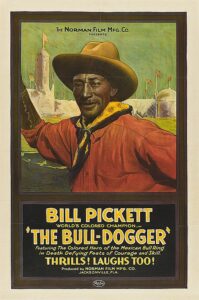
Another milestone in the life of Bill Pickett was his role in early motion pictures. He became one of the first African American cowboys to appear in silent films, including the historic Western film:
The Bull-Dogger
This film showcased his rodeo skills to audiences who had never seen such athletic performances before. It also helped preserve visual evidence of early rodeo techniques and cowboy culture.
Although he achieved fame, Pickett faced discrimination that limited his opportunities. Many rodeo competitions excluded Black performers, forcing him to rely on traveling shows to demonstrate his talent.
His perseverance made him a symbol of resilience among Black cowboys of the Old West.
 Recognition and Legacy in American History
The legacy of Bill Pickett continued long after his death. In recognition of his contributions to rodeo and Western culture, he was posthumously inducted into the prestigious:
National Cowboy & Western Heritage Museum
He became the first African American cowboy to receive this honor, marking a major milestone in American cultural history.
Today, his name is remembered as a pioneer who changed the sport of rodeo forever.
His story demonstrates that innovation and courage can overcome social barriers, leaving a lasting impact on history.
Why Bill Pickett Still Matters Today
The story of Bill Pickett is more than a biography it is a lesson in persistence and creativity. His invention of bulldogging helped transform rodeo into a structured sport, while his performances inspired generations of athletes.
Modern rodeo competitions continue to feature steer wrestling as one of their main events, proving that his influence remains alive more than a century later.
For historians, educators, and students, learning about Bill Pickett facts helps explain how Black pioneers shaped American entertainment and sports culture.
His legacy reminds us that history is often driven by individuals willing to challenge limits and create something new.
Key Takeaways
- Bill Pickett invented the rodeo sport known as bulldogging
- He became one of the first internationally recognized Black rodeo performers
- His work helped popularize rodeo entertainment worldwide
- He appeared in early silent films that documented cowboy culture
- He was the first African American inducted into the National Cowboy & Western Heritage Museum
Frequently Asked Questions
Who was Bill Pickett and why is he famous?
Bill Pickett was a legendary African American cowboy and rodeo performer who invented the sport of bulldogging, now known as steer wrestling.
What did Bill Pickett invent?
He invented bulldogging, a rodeo event where a rider jumps from a horse to wrestle a steer to the ground.
Was Bill Pickett in the Cowboy Hall of Fame?
Yes. He was inducted into the National Cowboy & Western Heritage Museum in 1971.
Did Bill Pickett appear in movies?
Yes. He starred in the silent Western film The Bull-Dogger, which showcased his rodeo skills.
Readers interested in exploring more about Bill Picket can explore Bill Picket wikipedia and interested in Black Western pioneers can continue learning through our detailed biographies of Buffalo Soldiers, Nat Love, and Stagecoach Mary, while also reviewing verified historical records from trusted institutions like the National Archives and educational resources published by National Geographic.