a
- Faith-driven historical fiction blends documented history with authentic Christian values — faith isn’t decoration, it’s the engine of the story.
- Black American history is inseparable from the Black church — this genre finally tells that complete story.
- The genre serves church book clubs, history lovers, and anyone who wants spiritual depth in their reading.
- Authenticity matters: the best authors in this space write from lived faith, not borrowed theology.
- Books like Dark Prairie by Lonesome B. Augustine model what the genre looks like at its best — gritty history, genuine faith, unforgettable characters.
If you search for “faith-driven historical fiction” online, you’ll find a lot of romance novels with a cross on the cover. That’s not what we’re talking about here.
Faith-driven historical fiction — especially faith-driven Black history fiction — is something rarer, more demanding, and more important. It’s the kind of storytelling that puts a Black family on the Texas frontier in 1873, surrounds them with violence and injustice, and then shows you exactly how faith — not wishful thinking, not luck, but bone-deep Biblical faith — becomes the only thing that holds them together.
This is the genre that Lonesome B. Augustine has devoted his writing life to. And it’s the genre that Black Christian readers, church book clubs, and history lovers have been hungry for without always having the right words to describe it.
This guide defines the genre, explains why it matters, shows you what to look for, and points you to books worth your time — including a few you may not have heard of yet.
The Definition: What Makes Fiction “Faith-Driven”?
A faith-driven story is one where the protagonist’s relationship with God — or their struggle toward it — is not background noise. It is the point.
In conventional historical fiction, faith might appear as period texture: the character goes to church on Sunday, quotes scripture, attends a revival. In faith-driven historical fiction, faith is the lens through which every decision is made, every crisis is interpreted, and every victory or defeat is understood.
Think about what this requires of the characters and the author:
- When a character faces betrayal, they must decide whether vengeance or forgiveness is the Biblical response — and live with that choice.
- When injustice seems absolute, the character must grapple with whether God is still just — and find an answer that holds.
- When survival means compromise, the character must measure that compromise against their covenant with God.
This is not easy storytelling. It demands that the author have genuine theological depth — and the courage to put characters in situations where faith is genuinely tested, not merely displayed.
Why Black American History Is Inseparable from Faith
Here is something secular historical accounts consistently understate: the Black church did not just provide comfort to enslaved people and their descendants. It provided structure, strategy, literacy, mutual aid, and the moral framework that made resistance possible.
Harriet Tubman famously described her escapes as God-directed — “I never ran my train off the track,” she said, “and I never lost a passenger.” Frederick Douglass’s awakening as an abolitionist was inseparable from his reading of scripture. The Montgomery Bus Boycott was organized out of churches. The civil rights movement’s language was almost entirely Biblical.
When historical fiction about Black Americans ignores or minimizes faith, it is telling an incomplete story. It’s the equivalent of writing about World War II without mentioning Allied command structures — you have the events but you’ve cut out the architecture that explains why people did what they did.
Faith-driven Black history fiction repairs that gap. It takes the church — the deacons and mothers and Sunday school teachers and circuit-riding preachers — seriously as historical actors and places them where they belong: at the center.
The Four Pillars of Great Faith-Driven Black Historical Fiction
1. Research That Respects the Ancestors
You cannot fake it. Readers who descend from the people being depicted will know if you’ve done your homework. The best authors in this genre spend years with census records, WPA slave narratives, local church histories, land deeds, and firsthand accounts before they write a word of dialogue.
This is especially true when depicting periods like Reconstruction, the Black cowboy era, the Great Migration, or the early 20th-century South. The geography, the economics, the specific textures of daily life — these must be accurate or the story loses its moral authority.
2. Faith That Is Tested, Not Merely Present
The difference between a faith-driven story and a faith-flavored story is whether faith is ever genuinely challenged. Does the protagonist ever doubt? Does God ever seem absent? Does the character have to choose between a certain earthly good and an uncertain divine promise?
The most powerful moments in this genre are the ones where faith looks costly — because that’s when it becomes real.
3. Characters Who Are Fully Human
Faith-driven fiction fails when its characters become saints rather than people. Real faith is carried by people who are also angry, lustful, cowardly, proud, and selfish. The redemption arc only has weight if we believe the starting point.
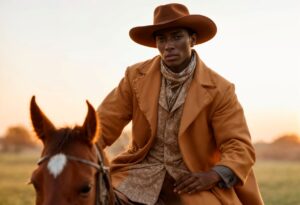
In Dark Prairie, Lonesome B. Augustine’s Black cowboy protagonist is not a Sunday school hero. He’s a man shaped by violence and loss who must choose, again and again, whether his faith is strong enough to survive the frontier. That tension is what makes the book impossible to put down.
4. An Author Who Has Lived the Faith
Readers can tell. When someone who has genuinely prayed in desperation, who has held scripture like a lifeline during an impossible season, writes about a character doing the same thing — there is a quality to the language that cannot be manufactured. This is why the best writers in this genre are, themselves, people of deep faith.
What Faith-Driven Black Historical Fiction Is NOT
- It is not propaganda. The best books in this genre don’t present a rosy picture of faith or history. They show the complexity of both.
- It is not Christian romance. While there may be love stories, the genre is defined by its historical and spiritual ambition, not by its romantic plotline.
- It is not a sermon. The theology emerges from the story — from what characters do and suffer and choose — not from speeches.
- It is not comfortable. These books go to hard places: slavery, lynching, dispossession, poverty, structural racism. The faith in these stories earns its authority by surviving contact with reality.
Who Should Read Faith-Driven Historical Fiction
This genre has a natural home in church book clubs, where it generates the best kind of conversation: about history you didn’t know, about faith under pressure you can relate to, about what it means to be Black and Christian in America across the centuries.
- High school and college students studying African American history who want a human entry point into the material
- Anyone who loved Roots, Beloved, or The Underground Railroad and wants books that add spiritual depth
- Readers who feel that most “Christian fiction” is too sanitized and most “literary fiction” has no use for God
- Educators looking for supplemental texts that engage students with history through story
Books to Start With
Dark Prairie by Lonesome B. Augustine
Set in the post-Civil War American frontier, this novel follows a Black cowboy whose faith is tested by violence, loss, and the unforgiving landscape of the West. Rooted in the real history of the 1 in 4 cowboys who were Black, it’s the book that opens readers’ eyes to a chapter of Black American history they were never taught — and does it through characters they won’t forget.
ICE by Lonesome B. Augustine
A companion work that explores different terrain — both geographic and spiritual — with the same commitment to historical authenticity and faith-driven storytelling.
Both books are available through lonesomeaugustine.com and on Amazon.
Frequently Asked Questions About Faith-Driven Historical Fiction
What is faith-driven historical fiction?
Faith-driven historical fiction is a genre that places authentic Christian or spiritual values at the center of stories set in a real historical period. Characters navigate real events — wars, migrations, injustice — through a lens of faith, prayer, and redemption, making the history both accurate and spiritually meaningful.
How is faith-driven historical fiction different from Christian fiction?
Christian fiction is a broad category that includes contemporary, romance, and fantasy stories with faith themes. Faith-driven historical fiction is specifically grounded in documented history, using real events and periods as the backdrop for stories where faith shapes every decision and outcome.
Why does faith-driven Black history fiction matter?
The Black church has been the backbone of African American survival and resistance for centuries. Faith-driven Black history fiction recovers that spiritual backbone and shows how faith — not just struggle — defined Black American identity from slavery through the Great Migration and beyond.
What are good examples of faith-driven Black historical fiction books?
Examples include Dark Prairie by Lonesome B. Augustine, which follows a Black cowboy navigating the post-Civil War frontier through faith and grit, as well as works like Roots by Alex Haley and The Color Purple by Alice Walker, which both carry deep spiritual undertones rooted in Black historical experience.
Does faith-driven historical fiction have to be preachy?
No. The best faith-driven historical fiction weaves belief naturally into character decisions, relationships, and survival strategies rather than inserting sermons. Faith is shown through action — a character choosing forgiveness when vengeance was available, or finding hope in scripture when circumstances are darkest.
Who reads faith-driven historical fiction?
The primary audience includes Black Christian readers (especially women aged 35–65), church book clubs, historical fiction enthusiasts who want spiritual depth, educators teaching African American history, and anyone interested in how faith shaped historical communities.
Can I use faith-driven historical fiction in a church book club?
Absolutely. Faith-driven Black historical fiction is ideal for church book clubs because it opens conversations about history, faith under pressure, and what Christian values look like in real-world hardship. Many authors — including Lonesome B. Augustine — are available for author talks at churches.
How accurate is the history in faith-driven historical fiction?
Quality faith-driven historical fiction is deeply researched. Authors typically spend years studying primary sources, census records, slave narratives, and regional histories to ensure that dates, locations, and cultural details are accurate, even when characters and dialogue are invented.
What makes a faith-driven story feel authentic vs. forced?
Authenticity comes when the author has lived experience with faith. When a writer knows what it feels like to pray in desperation, to trust God when circumstances are impossible, those emotions translate to the page naturally. Forced faith fiction reads like a theology lesson; authentic faith fiction reads like truth.
Where can I find more faith-driven Black historical fiction books?
Start at AALBC.com (African American Literature Book Club), your local library’s African American studies section, or lonesomeaugustine.com for books by Lonesome B. Augustine — a faith-driven Black history author based in Fredericksburg, Virginia.
Lonesome B. Augustine is a faith-driven Black history author and Christian speaker based in Fredericksburg, Virginia. His novels — including Dark Prairie and ICE — recover the untold stories of Black Americans who shaped this nation through courage, resilience, and unshakeable faith. He speaks regularly at churches, schools, and community events throughout the Fredericksburg region. Learn more →