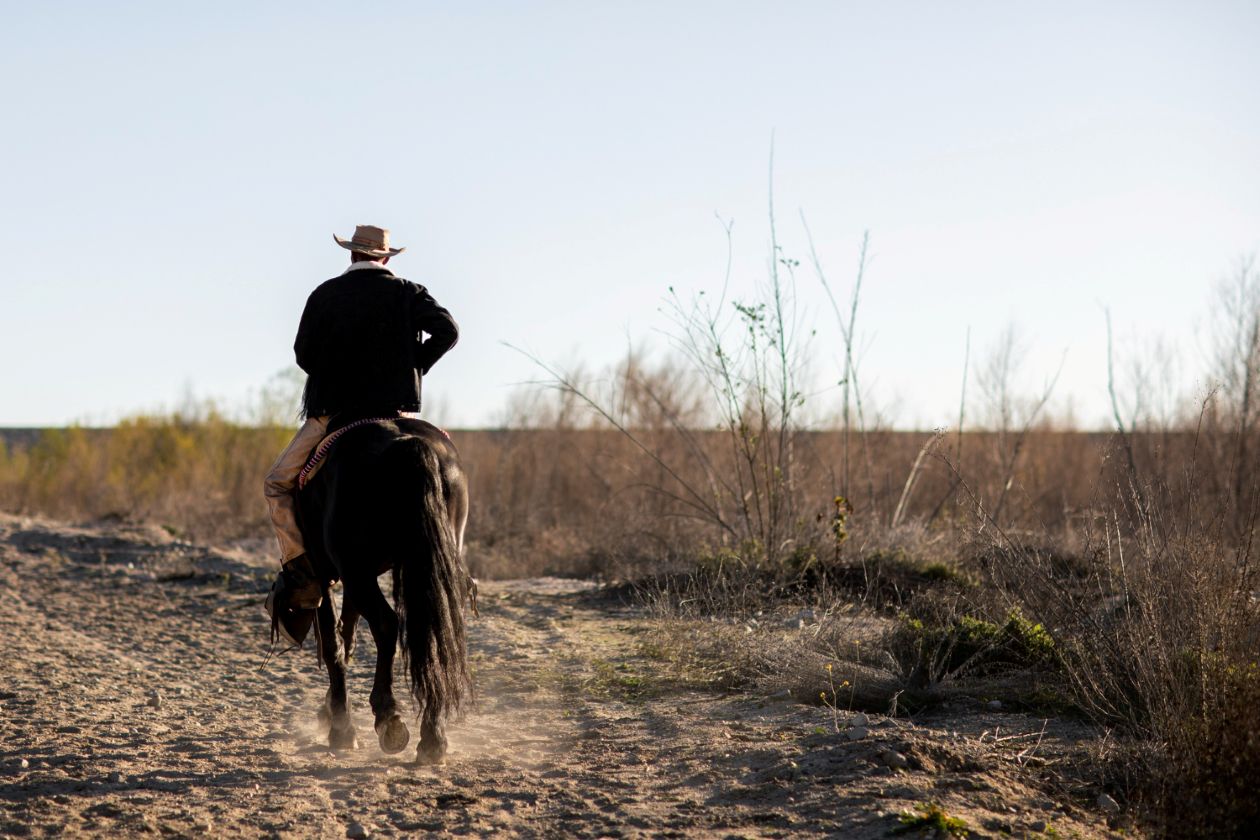
Photo by freepik
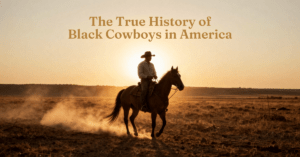
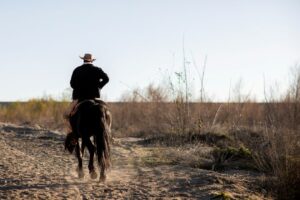
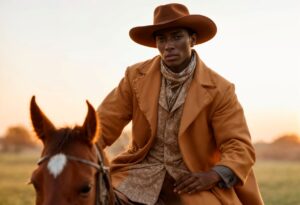
When an attempt at exacting revenge on a bloodthirsty and racist ex-Confederate goes awry, the Ware family has to flee South Carolina to find new hope underneath the burning sun. Such is the premise of Lonesome B. Augustine’s Dark Prairie: Forged by Blood, Bound by Choice, a wonderful addition to the canon of American Western fiction. Replete with African-American Western heroes, the book serves as a brilliant introduction to the obscured presence of Black cowboys in the Wild West, who rode across the deserts and the prairies, pursuing a life of freedom and liberty and fighting fiercely against the racist world around them.
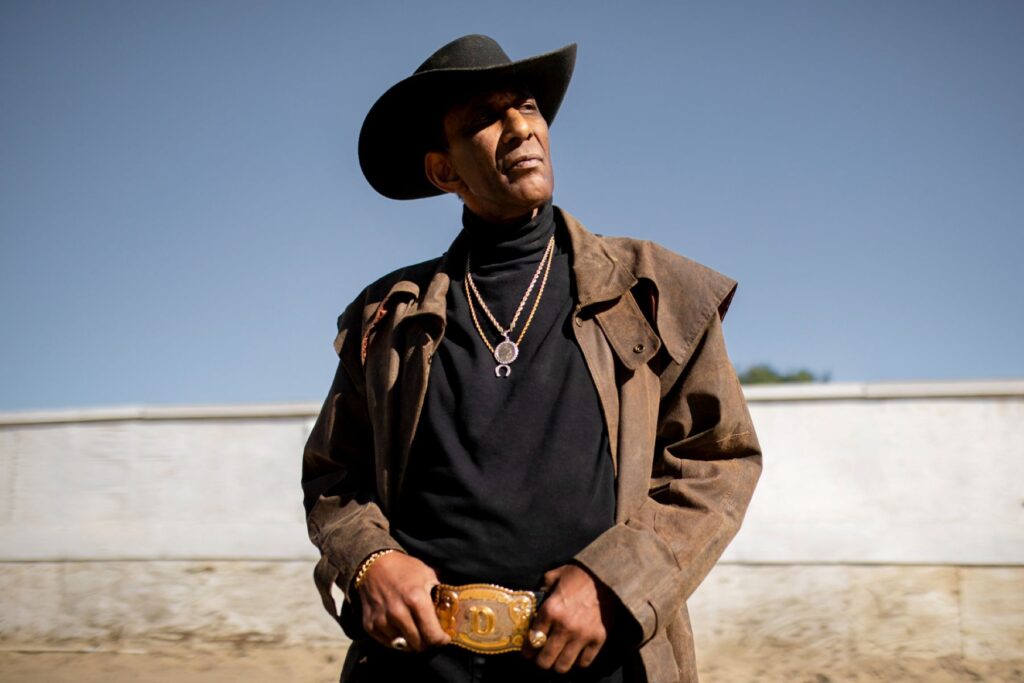
Photo by freepik
Do Black Folk Exist in the Wild West?
The Wild West holds a special place in the history of the United States, having given the nation its expansionist and enterprising characteristics that so shaped it during the early 20th century and beyond.
When one imagines the climes of the Wild West, there is the image of a wide dirt road, wooden buildings on either side, and from point to point. Peopling this big street would be a wide assortment of sorts: marshals, cowboys, prostitutes, and the like. There’d be White people in abundance, of course, and then there’d be Hispanic folk and Native Americans. Occasionally, there would be the odd Chinese person, typically with a storefront or two. And there’s that. You’d go on thinking about that world without ever noticing there weren’t Black people up and about.
Despite a massive presence in the American frontier, African-Americans are rarely depicted in media that’s set in the period–and, if they are, they are always delegated to being in the background and never as characters who actively participated and contributed to the Western expansion.
When talking about the Wild West, there’s always an outsized focus on the White people. You’ve probably heard of Billy the Kid, Butch Cassidy, the Sundance Kid, Black Bart, the Dalton Brothers, and more.
But have you had an inkling of Black cowboys? Maybe you’ve come across Nat Love before, but that’s that. What about the others? In spite of accounting for 25% of cowboys who participated in cattle drives, people seem to think there were no Black cowboys.
The History of Black Cowboys
After the Civil War, slavery was promptly abolished by the federal government, but African Americans were still denied many rights. Refusing to find employment from their former slavemasters, thousands of former slaves moved out of the South, with a good chunk of them heading to the West, participating in the burgeoning ranching industry that had sprung up with American expansion.
This proved to be enticing to a lot of former slaves as compared to other already established industries. Black people employed as ranchers were given a wider range of responsibilities and a higher salary (almost equal to that of White men) despite the racism that persisted and often manifested in violence. Thus, as is always the case, Black people, despite helping prop up the societies they found themselves in–societies that more often than not saw them as lesser–were deliberately scrubbed from the annals of history.
Another example of this whitewashing is the fact that “cowboy” was first used as a pejorative for Black ranchers. This is singularly ironic considering that the archetypal image of the “cowboy” hews more to the manner of someone like Clint Eastwood or John Wayne. In Antebellum Texas, it was common for White ranchers to be called “cowhands” while their Black counterparts were derided as “cowboys.”
Yet, rarely is the Black cowboy a figure of attention in Western fiction.
African-American Western Heroes
Because scarce are the portrayals of Black cowboys and much of their history repressed, here are some noteworthy personages that existed during the Old West, some of whom you can find in Augustine’s Dark Prairie: Forged by Blood, Bound by Choice.
Sam “Bronco Sam” Stewart
Arriving in Wyoming from Texas around 1874, the man called Bronco Sam first started out as a cook before working his way up and becoming a prominent horse wrangler. He was a legendary horse tamer and an equally legendary rider. It was said of him that he “had the nose of an Indian warrior, the curly hair of the African, and the courtesy and equestrian grace of the Spaniard.”
Even years after his death, he was famed as being one of the best riders in the Wild West.
John Ware
Despite being born in South Carolina, John Ware became influential when he moved to Alberta, becoming one of the leading figures in its nascent ranching industry. He was one of the first ranchers in the region, making great use of the skills he learned as a cowboy working across Texas to Montana.
Despite not being well-known in the United States, John remains a legendary figure in Alberta, having contributed to its frontier and history.
“Stagecouch Mary” Fields
Born into slavery, little is known about Mary Fields before she relocated to Montana. After the Civil War, she got a job as a chambermaid on board a steamboat, where she encountered a man whom she would work under until she found herself selling her services to the U.S. Postal Service as a mail carrier of a star route (being the first Black woman to do so).
To protect herself and her packages from wolves, thieves, and bandits, she carried multiple firearms, never missing a day of work. Because of her dependability and reliability, she was given the nickname “Stagecoach Mary.”
Cathay Williams
Born as a slave in Missouri, Cathay Williams quickly learned how to take advantage of opportunities that presented themselves to her. When the Civil War erupted, and Jefferson City was captured, she became a cook for Union soldiers.
Then, under the false name of “William Cathay,” she enlisted in the army, becoming the first Black woman to be awarded the Good Conduct Medal and the only Black woman to have joined the legendary Buffalo Soldiers, an all-black regiment.
Willie “Bill” Pickett
Bulldogging is a much-valued part of the rodeo, where a rider on a horse would pursue a steer before dismounting and taking the animal by the horns to pull it to the ground. The spectacle, often called “steer wrestling,” was first invented by Willie M. Pickett, who first thought up the idea of wrestling a steer to the ground after seeing that a bulldog could do it, thinking that if the dog could do it, why couldn’t he?
While he was eventually overshadowed by White performers, despite inventing the skill itself, Bill still became the first African-American to be inducted into the National Rodeo Hall of Fame.
Photo by freepik
Shedding Light on Black History
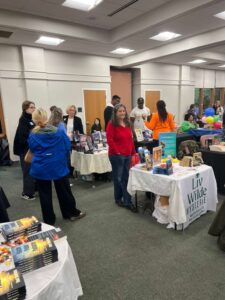
Although the list above is not even close to being exhaustive, it can still help in illuminating the fact that African-American Western heroes existed. And if you’re looking for a riveting and compelling read in that regard, please check out Lonesome B. Augustine’s Dark Prairie: Forged by Blood, Bound by Choice, a narrative of vengeance, freedom, and identity.
Also: check out ICE: A Story of Love, Crime and Politics, another book by Lonesome B. Augustine.